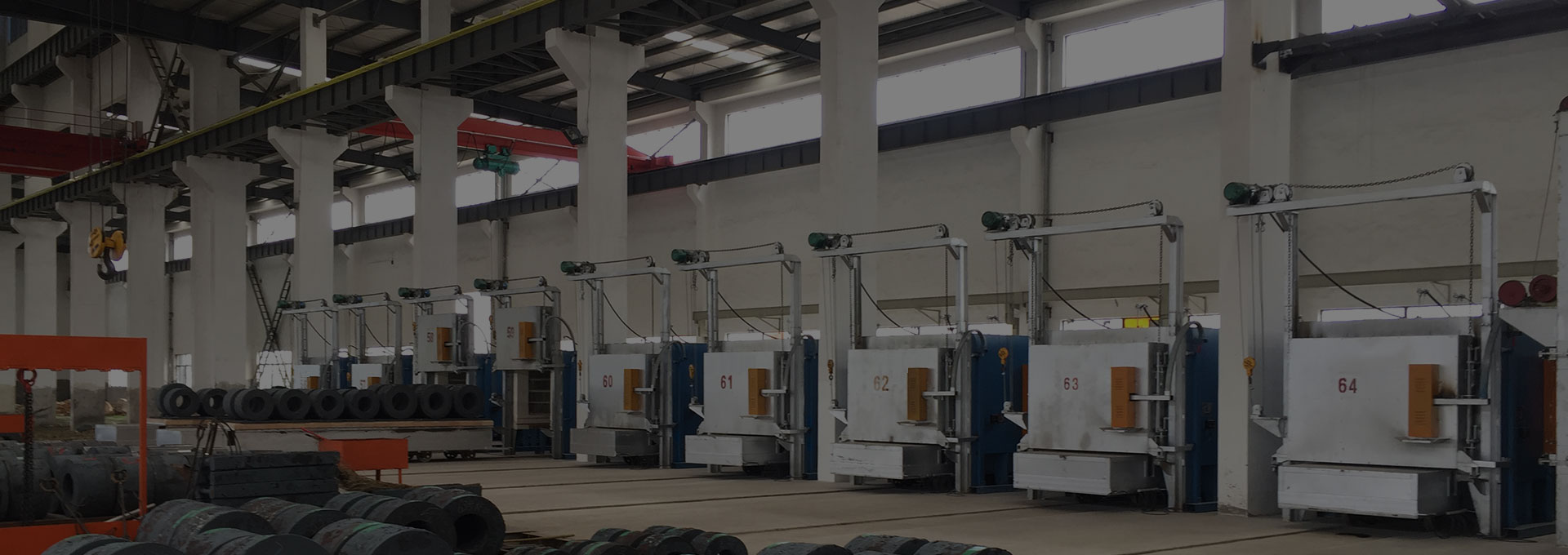
Well-Type Furnace

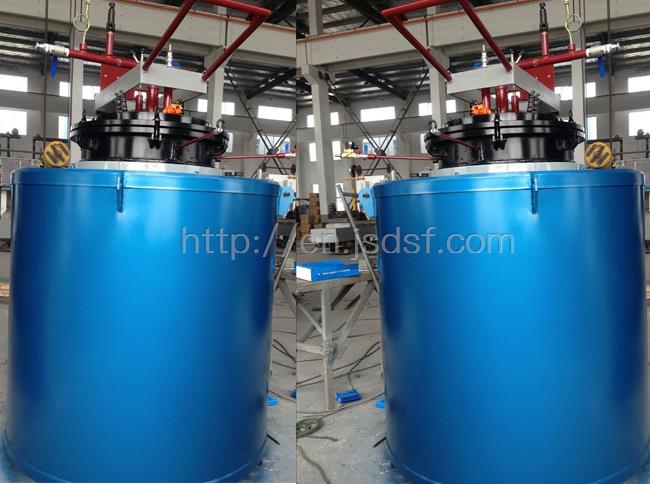
Carburizing furnace is a new type of energy-saving cycle operation heat treatment furnace.There are two types of heat so
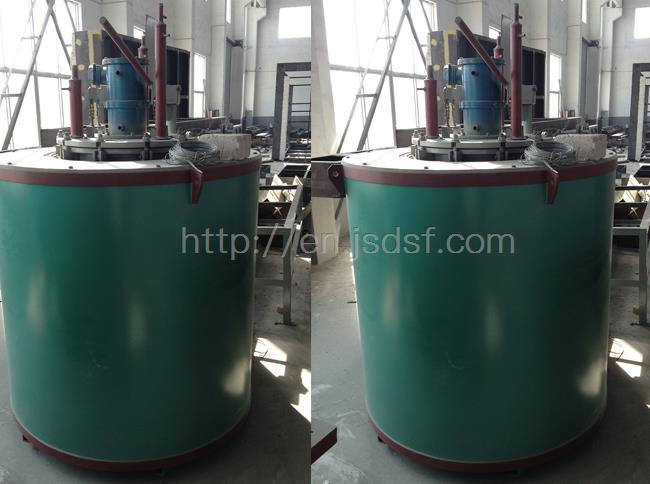
Carburizing furnace is a new type of energy-saving cycle operation heat treatment furnace.
There are two types of heat sources for carburizing furnaces. One is fuel combustion heating mode, which has fuel oil, there are coal gas; The other is electric. There are two kinds of carburizing furnace: intermittent type and continuous type.
intro
Vacuum carburizing is one of the world's advanced heat treatment means, and it is also a new heat treatment technology that has developed rapidly in recent years. Compared with the traditional carburizing method, vacuum carburizing can control the carbon content, make the carburizing products have good uniformity and surface quality, and has the advantages of energy saving, and is widely used in automotive, machinery, aerospace and other fields.
Furnace temperature uniformity and empty furnace heating time are the main indicators of vacuum furnace heating performance. These indicators are mainly determined by the structure of the heating chamber of the core component of the vacuum carburizing furnace, and whether the design is reasonable directly affects the performance of the furnace and the production efficiency of the product. The choice of intermittent or continuous type can be determined by comparing factors such as output, variety, workpiece size and shape, carburizing layer thickness, investment and management costs.
Categories:
Intermittent carburizing furnace
(1) The well furnace is a simple carburizing furnace, the shape is cylindrical, and the bottom or top of the furnace is equipped with a stirring fan. The workpiece, together with a clamp or basket of heat-resistant steel, is manually loaded from the top of the furnace by a crane or hoist. [2]
(2) Horizontal furnace is a kind of furnace type that is widely used at present. In the case of a box-type horizontal furnace, the quenching oil nozzle is located between the loading and discharging device and the carburizing furnace. Above the quenching oil tank is the cooling room. The quenching oil tank, the cooling room and the carburizing furnace form a whole.
Continuous carburizing furnace
(1) Push-rod furnace, push-rod furnace. This kind of stove is used more often. The furnace is equipped with 4 furnace sections for heating, carburizing, diffusion and cooling. In order to control the temperature of each section, the radiation tube of coal gas or oil is used for heating, and the furnace gas stirring fan is installed in the carburizing section and the diffusion section to ensure the product quality. Electrical interlocking operation for charging trolley, charging door, chain door and pushing machine. [3]
(2) Rotary drum furnace. A furnace pot made of heat-resistant steel with spiral plates is installed in the furnace along the long direction and is driven by a rotating mechanism at the discharge end of the furnace. Gas carburizing is used.
(3) vibrating-bottom furnace, vibrating-bottom furnace is equipped with a furnace plate made of heat-resistant alloy, which is hoisted in the furnace with a hanging bar, and the vibration device at the charging end of the furnace is used to make the furnace bottom reciprocate, and the workpiece on the bottom of the furnace is carburized, and after carburizing, it falls into the quenching tank at the end of the bottom of the furnace. The vibrating bottom furnace is the same as the rotary drum furnace, which is quenched after the workpiece is heated, so the efficiency is high. The quenched workpiece falling into the oil tank is lifted out of the oil tank by the chain lifting device.
(4) Mesh belt furnace, mesh belt continuous carburizing furnace. In this type of furnace, a mesh belt roller is arranged on the charging side outside the furnace and the discharging side inside the furnace. The roller is tensioned with a fire-free mesh belt made of heat-resistant alloy, and a supporting roller is arranged between the mesh belt rollers. After rotating these rollers to complete heating and carburizing in the upward movement of the mesh belt, the workpiece falls into the quenching tank along the chute on the discharging side to complete quenching.
Purpose:
Carburizing furnace is a new type of energy-saving cycle operation heat treatment furnace, mainly for steel parts for gas carburizing. Due to the selection of light and energy-saving lining materials (ceramic fiber) and advanced integrated water-cooled furnace sealing fan, the series of carburizing furnace furnace temperature uniformity, fast warming, good heat preservation, workpiece carburizing speed, carbon potential atmosphere uniformity, uniform infiltration layer, when the furnace pressure is increased, there is no leakage, improve production efficiency and carburizing quality.
The carburizing furnace is composed of shell, lining, lifting mechanism of furnace cover, sealing fan for furnace, Muffle tank, heating element and electric control system. The shell of the furnace is made of welded steel plates and sections. The furnace lining is an energy-saving composite structure made of 0.6g/cm3 high-strength lightweight energy-saving firebrick, aluminum silicate fiber, diatom soil insulation brick and asbestos board. The furnace cover lifting mechanism is composed of motor, gear pump and other components. When the furnace cover is opened, just press the button on the control box, and the furnace cover rises at a speed of 30-70 mm/s. Two stroke switches are arranged on the lifting shaft. When the furnace cover rises, the lower stroke switch automatically cuts off the main circuit power supply of the carburizing furnace control cabinet, so that the heating element is powered off and stops working. The upper stroke switch limits the height of the lifting shaft to prevent the lifting from rising too high and falling out.
The furnace is equipped with a sealed fan on the furnace cover to stir the atmosphere in the Muffle tank and make its composition uniform, while making the furnace temperature tend to be uniform. There are also three process pipes on the furnace cover leading to the Muffle tank of the furnace: one sleeve is equipped with a three-head stainless steel drip device, through which methanol, kerosene or other organic liquids are injected into the furnace, and all kinds of liquids can be adjusted. The ammonia pore on the sleeve can be used to transport ammonia gas into the furnace for carbon and nitriding (the pipe can be closed when no nitriding is available); A casing is a sampling tube, the upper part of the casing can be connected with a "U" type glass tube manometer, used to monitor the role of the furnace Muffle tank is to maintain the furnace pressure, to ensure the normal progress of carburizing or carbon, nitriding, it is made of heat-resistant steel (casting). The heating element is coiled by the electric thermal alloy wire and installed on the inner wall of the furnace lining. Outside the furnace, the temperature of the carburizing furnace is transmitted by the thermocouple inserted into the furnace through the compensation wire to the automatic temperature control cabinet. The temperature control cabinet automatically controls, adjusts and records the heating temperature in the furnace. The carburizing furnace is equipped with a cooling bucket (optional) for storing the treated parts, and the bucket cover is equipped with a sand seal groove.
Operating procedures:
1. Preparation before opening the furnace
1, the carbon black in the furnace tank, check the sealing gasket.
2, check the circulation fan, motor, grease the bearing, cooling water jacket water.
3, check the thermocouple position and oil pressure lifting mechanism.
4, check titrator, methanol, kerosene storage.
2. Operating rules for furnace opening
1. Turn on the power switch.
2, adjust the automatic control device of the instrument (as shown on the right) to allow power heating.
3. When heating up, turn on the fan.
4, when the furnace temperature rises to 850 ° C, begin to drop kerosene (or methanol).
5, after the furnace temperature to the required temperature, cut off the power supply of the furnace and fan, in order to install the workpiece. Then close the furnace door, connect the fan and the furnace power supply, and operate according to the range.
6, after the workpiece is out of the oven, close the furnace cover, continue to leave the fan, cut off the furnace resistance wire power supply, drop a small amount of kerosene.
7. When the furnace temperature drops to 850 ° C, stop dripping kerosene.
8. When the furnace temperature drops to 600℃, stop the fan and cut off the power switch.
Use of the furnace pot:
Because the outside of the carburizing furnace tank is close to the electric heating element, the temperature is high, up to 950-L000 degrees, so the furnace tank is required to have good oxidation; The inside of the furnace is in the carburizing atmosphere, which requires the tank to have good carburizing resistance. At the same time, because of the large load of the furnace tank, it is also required that the furnace tank has a high temperature strength.
The surface of the outside of the furnace can be oxidized and spalling, which will lead to cracking, and the main form of failure is the leakage of the furnace tank. Casting defects have a great influence on the service life of the furnace pot, and there are often more oxidation and cracking opportunities at the defects. The furnace tank is damaged soon after repair welding after slight cracking, which is mainly due to the deterioration of welding performance after oxidation and carburizing.
Sometimes annular cracks occur below the mouth of the furnace, which is related to the structure of the furnace and the complex stress situation in the area. It can be seen from the structure that the ring crack area is the transition zone between the high temperature area in the tank and the low temperature area in the upper part of the tank mouth, so the heat reaction of the area under the action of different temperatures in the upper and lower parts. The force is greater. In addition, this area is located precisely at the bottom of the sealing ring at the mouth of the furnace tank and on the wall of the tank.
The connected part is in the section where the cross-section changes due to thermal stress and load. The superposition of force, coupled with the bottom of the sealing ring is the supporting point of the whole furnace pot, and the stress there is large when working. Moreover, it is also the hot joint part of the casting, and there is more possibility of casting defects, so there is a ring crack perpendicular to the stress.
Compared with the service life of the furnace pot, the service life of Cr18Ni25Si2.Cr25Ni20 steel furnace pot is high, which is more than 3 times that of Cr18Mn12Si2N steel furnace pot.
COPYRIGHT © 2023 ChangZhou DingShengFeng Industrial furnace Co.,LTD All rights reserved