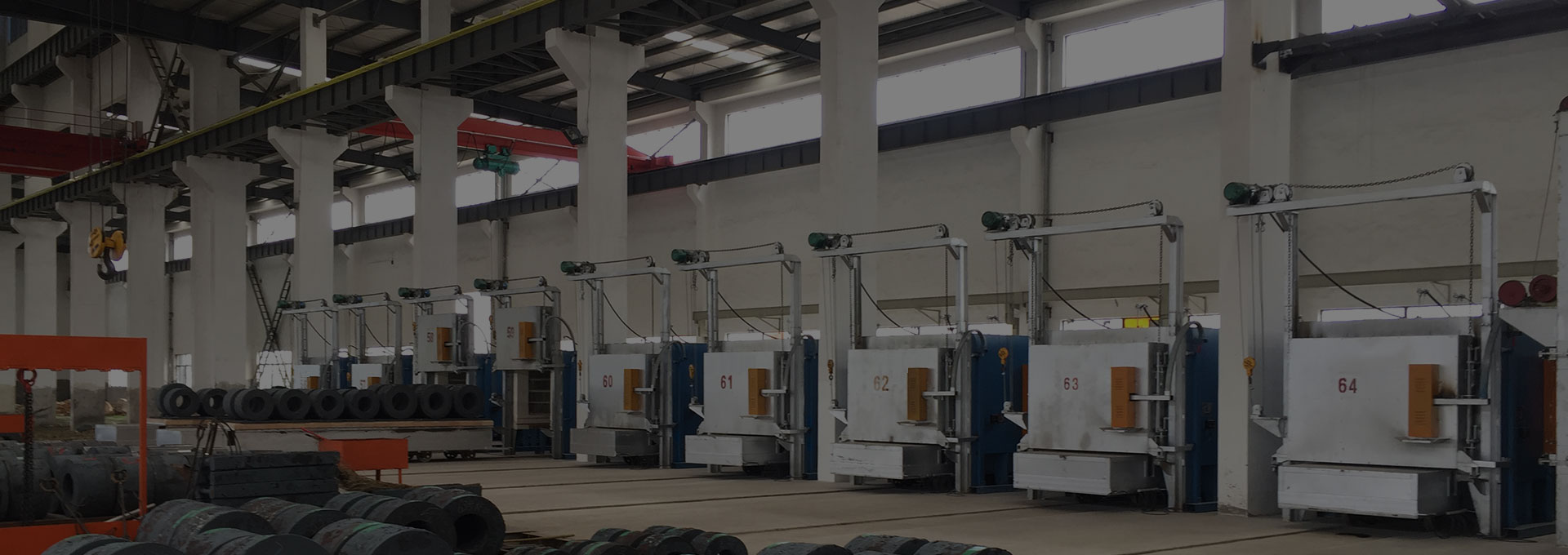
Trolley Furnace

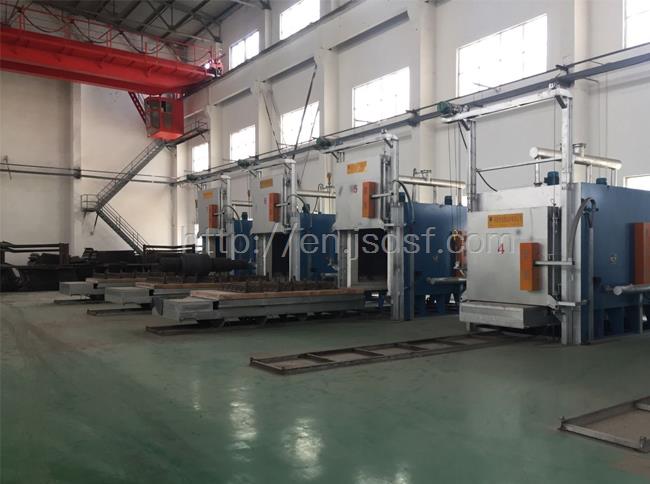
Trolley type annealing furnace: It is the national standard energy-saving cycle type operation furnace, super energy-sav
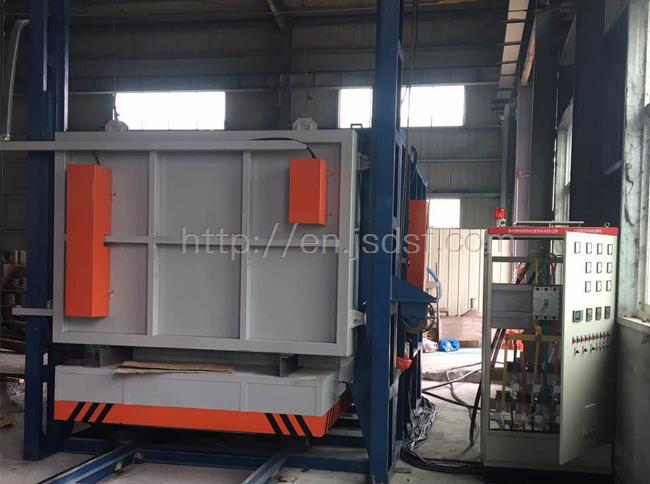
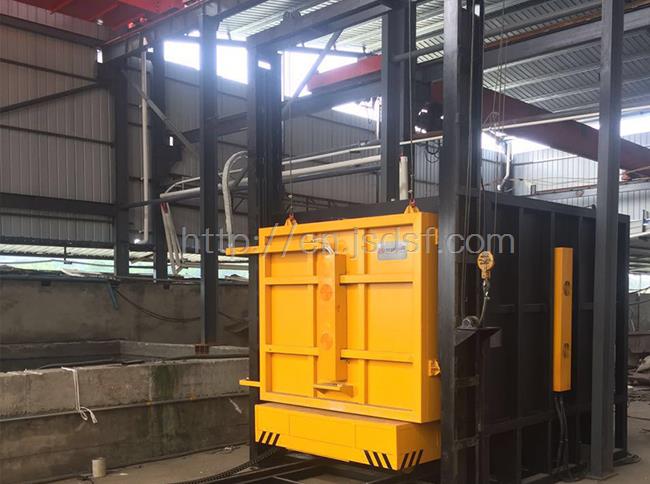
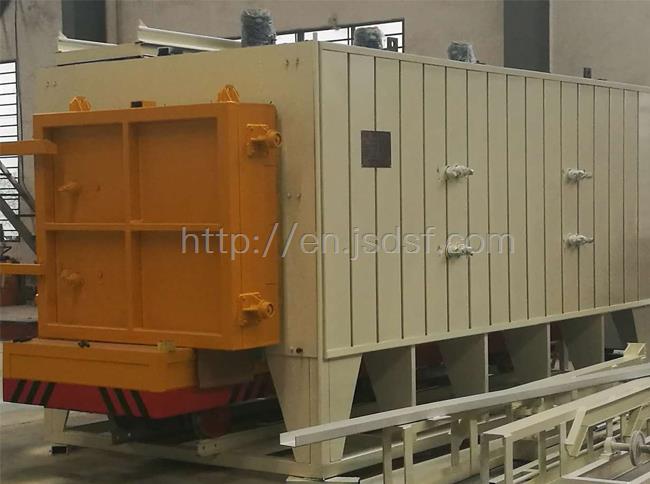
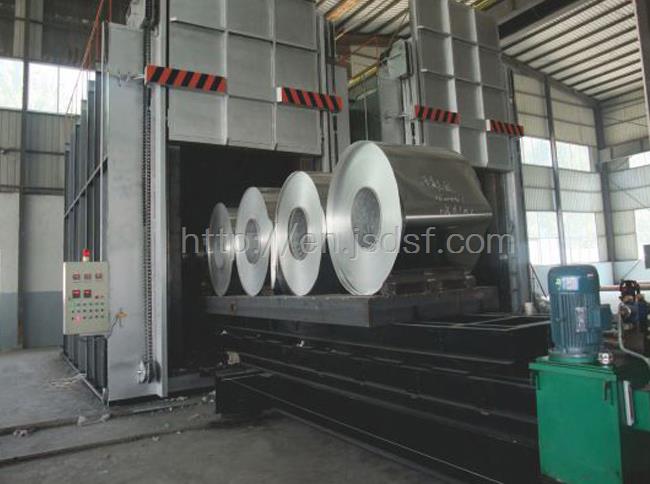
Trolley type annealing furnace: It is the national standard energy-saving cycle type operation furnace, super energy-saving structure, using the whole fiber furnace structure, saving 30% of electricity.
Composite high-aluminum porcelain nail set, anti-impact sealing bricks for the trolley, automatic sealing of the trolley and the furnace door, integrated rail, no need for basic installation, can be used on the horizontal ground
Applications:
Used for high chromium, high manganese steel castings, ductile iron, roll, steel ball, 45 steel, stainless steel and other quenching, annealing, aging and various mechanical parts of the heat treatment.
Technical parameters:
(1) Rated power: according to the furnace volume
(2) Rated voltage: 380V
(3) Phase number: 3P
(4) Frequency: 50HZ
(5) Operating temperature: 1200℃
(6) Number of heating zones:
(7) Furnace temperature uniformity: ≤±10℃
(8) Empty furnace heating time: ≤2h
(9) Empty furnace loss: ≤15%
(10) Work area size
(11) Temperature control accuracy: ≤2℃
(12) Temperature control mode: PID control
Brief introduction of structure:
(1) The car furnace is composed of a furnace body and a movable car
(2) The shell of the furnace body and the trolley are welded with steel plates and sections.
(3) The heating element adopts 0Cr27AL7Mo2 resistance belt produced by Shougang, which is arranged on the furnace door, furnace side, furnace back wall and platform car.
(4) The furnace lining is made of high aluminum fiber cotton, which has strong high temperature resistance and good thermal insulation, and is not replaced by ordinary fiber cotton. The load-bearing part is built with heavy firebrick to enhance the structural strength of the furnace lining. In order to ensure that the heat transfer at the bottom of the truck is not very high, the thermal insulation layer of the truck is composed of aluminum silicate refractory fiber and diatomite insulation brick to improve the thermal insulation performance of the furnace body.
Main technical features
The electric furnace is mainly composed of the furnace body (including the furnace door), the furnace lining, the furnace door lifting, the furnace car, the furnace car transmission mechanism, the electric heating device, the temperature control and recording system and other main parts.
1. Furnace body
(1) Furnace lining:
The furnace lining is made of all-aluminum silicate refractory fiber blanket with excellent thermal insulation performance, which is processed and combined into a large plate and combined into a furnace lining.
The furnace body with fire-resistant whole fiber large plate structure has excellent heat insulation performance. The weight of the all-fiber furnace lining is only 1/30 of the refractory brick furnace body, which not only has excellent thermal insulation performance, but also saves about 30% energy than the brick resistance furnace of the same specification, and the heating rate is faster.
The whole fiber refractory structure has good thermal shock stability, resistance to acute cooling and heat, and longer service life than brick furnace. This kind of furnace body maintenance is very convenient, if damaged by mechanical collision, as long as the partial repair can be used. The lining also has the characteristics of simple installation and short construction time.
(2) Steel structure: the whole fiber plate lining is hung on the steel skeleton, which is welded by the section steel, steel plate, etc., which is lightweight and reliable. The steel structure of the furnace is much lighter than that of the traditional firebrick furnace because of the all-fiber large-plate structure lining.
2, electric heating device
Advanced hanging wall structure, high radiation efficiency, strengthen the heat exchange in the furnace, improve the furnace heat efficiency, and extend the service life of the electric heating element. The electric heating element adopts 0Cr27AL7MO2 resistance belt, adopts mold processing into waveform structure, and is suspended on the furnace wall fixer (ceramic screw) in groups, which is very convenient to install and maintain, and has a long service life.
The car electric heating element adopts the same material spiral structure.
The trolley is a platform for carrying workpieces and running. The loading plane size of the trolley is:
(1) Refractory heat insulation material:
Heavy brick is used to ensure compressive strength. The heat insulation layer is divided into two parts, one part is diatomaceous earth brick and the other part is lightweight clay brick to ensure the heat insulation effect.
Heavy special-shaped firebricks are used around the car to improve the strength.
(2) Furnace car steel structure:
The frame is composed of section steel and channel steel, and its rigidity ensures no deformation under full load and heavy load. The lower part of the trolley is equipped with a running wheel device, and a reducer is used as a transmission mechanism. Steel sandseal around the frame. Both sides of the vehicle are provided with sealing devices matching side sealing.
(3) Interlocking device:
The inlet and outlet are equipped with double safety limit mechanism and interlocking mechanism with the furnace door to ensure operation. Car access flexible, accurate positioning.
(4) Furnace bottom plate:
On the trolley, the NI7N furnace bottom plate equipped with pressure and high temperature resistance is cast to bear the workpiece. In order to prevent the oxide generated after the workpiece heating from falling into the heating element through the gap between the furnace bottom plate and causing damage to the heating element, the plug-in contact between the furnace bottom plate and the furnace body is adopted.
4. Furnace door:
(1) furnace door structure;
The furnace door adopts light steel frame structure and refractory fiber as heat insulation material
(2) Furnace door lifting power:
The furnace door adopts electric lifting, and the electric hoist is installed above the furnace door frame.
(3) Protection:
The furnace door is provided with an upper and lower stroke double safety limit mechanism and an interlocking device with the furnace car, and the furnace car is provided with a double safety limit mechanism. Once the furnace door is opened, the power supply of the electric heating element is automatically cut off. When the furnace door is closed, the trolley shall not enter or exit.
Seal:
The sealing condition of a furnace directly affects the uniformity of temperature and power consumption in the furnace. The furnace adopts sealing facilities at all joints of the furnace, which are described as follows:
(1) The combination of the furnace door and the furnace body and the furnace car:
This joint is the truck type furnace is difficult to seal, but also the furnace leakage of large parts, the furnace adopts the furnace door weight and domestic advanced spring pressing device. This area can be sealed.
(2) The joint part of the furnace body and the two sides of the furnace car:
Because the furnace body and the furnace car have relative access, taking into account the expansion after heating, this part should have a considerable gap, so this part uses the refractory fiber and the firebrick soft contact dislocation seal, and there is a sand sealing groove two seals, a good guarantee of sealing effect.
(3) The joint of the furnace car and the back of the furnace body:
The insert type soft edge seal is adopted, and the power of the furnace car is used to press tightly.
6. Temperature control and recording system of resistance furnace
The control of the trolley type annealing furnace is controlled by PID zero-crossing trigger, the work is done by intelligent instrument, the size power can be adjusted, the three-phase current imbalance can be adjusted, and the temperature control can be set according to different heat treatment process requirements and automatic control.
COPYRIGHT © 2023 ChangZhou DingShengFeng Industrial furnace Co.,LTD All rights reserved